All Posts Tagged "Container Platform Best Practices" (5 Total)
Container Platform Best Practices: Storage
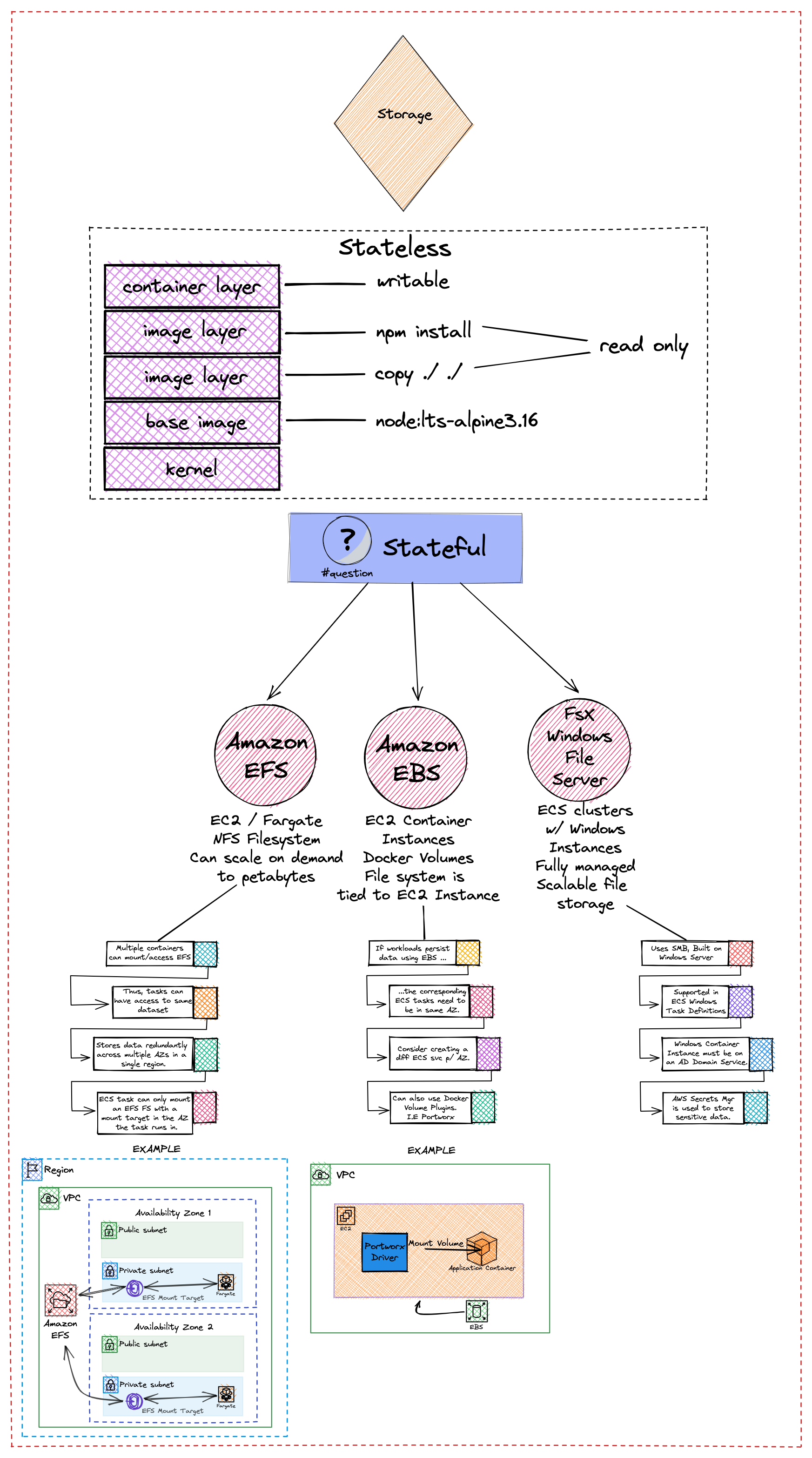
You can use Amazon ECS to run stateful containerized applications at scale by using AWS storage services, such as Amazon EFS, Amazon EBS, or FSx for Windows File Server, that provide data persistence to inherently ephemeral containers. The term data persistence means that the data itself outlasts the process that created it. Data persistence in AWS is achieved by decoupling compute and storage services. Similar to Amazon EC2, you can also use Amazon ECS to decouple the lifecycle of your containerized applications from the data they consume and produce. Using AWS storage services, Amazon ECS tasks can persist data even after tasks terminate.

Container Platform Best Practices: Security
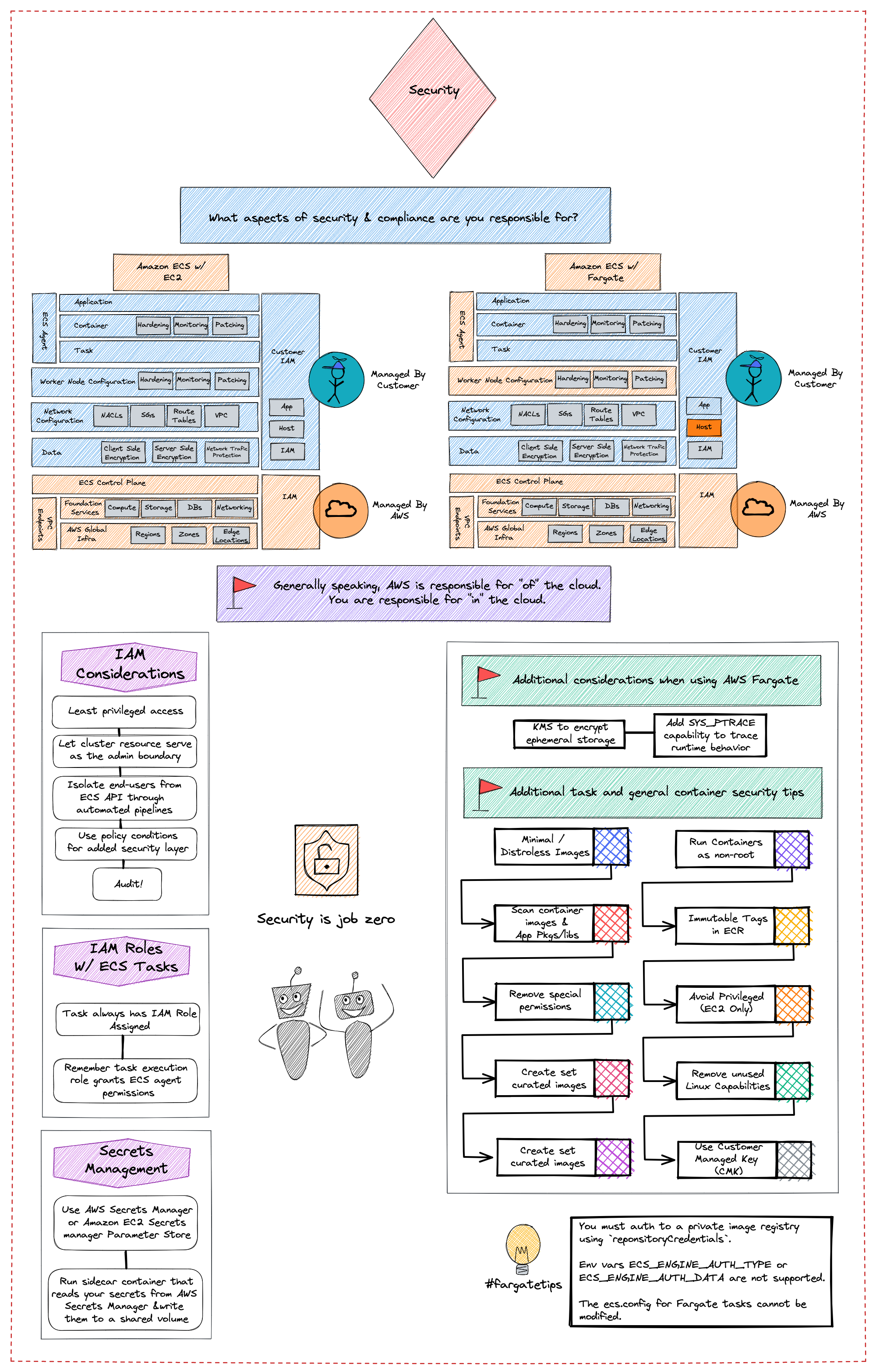
This visual provides security and compliance recommendations for protecting your information, systems, and other assets that are reliant on Amazon ECS. It also introduces some risk assessments and mitigation strategies that you can use to have a better grip on the security controls that are built for Amazon ECS clusters and the workloads that they support. Each topic in this guide starts with a brief overview, followed by a list of recommendations and best practices that you can use to secure your Amazon ECS clusters.
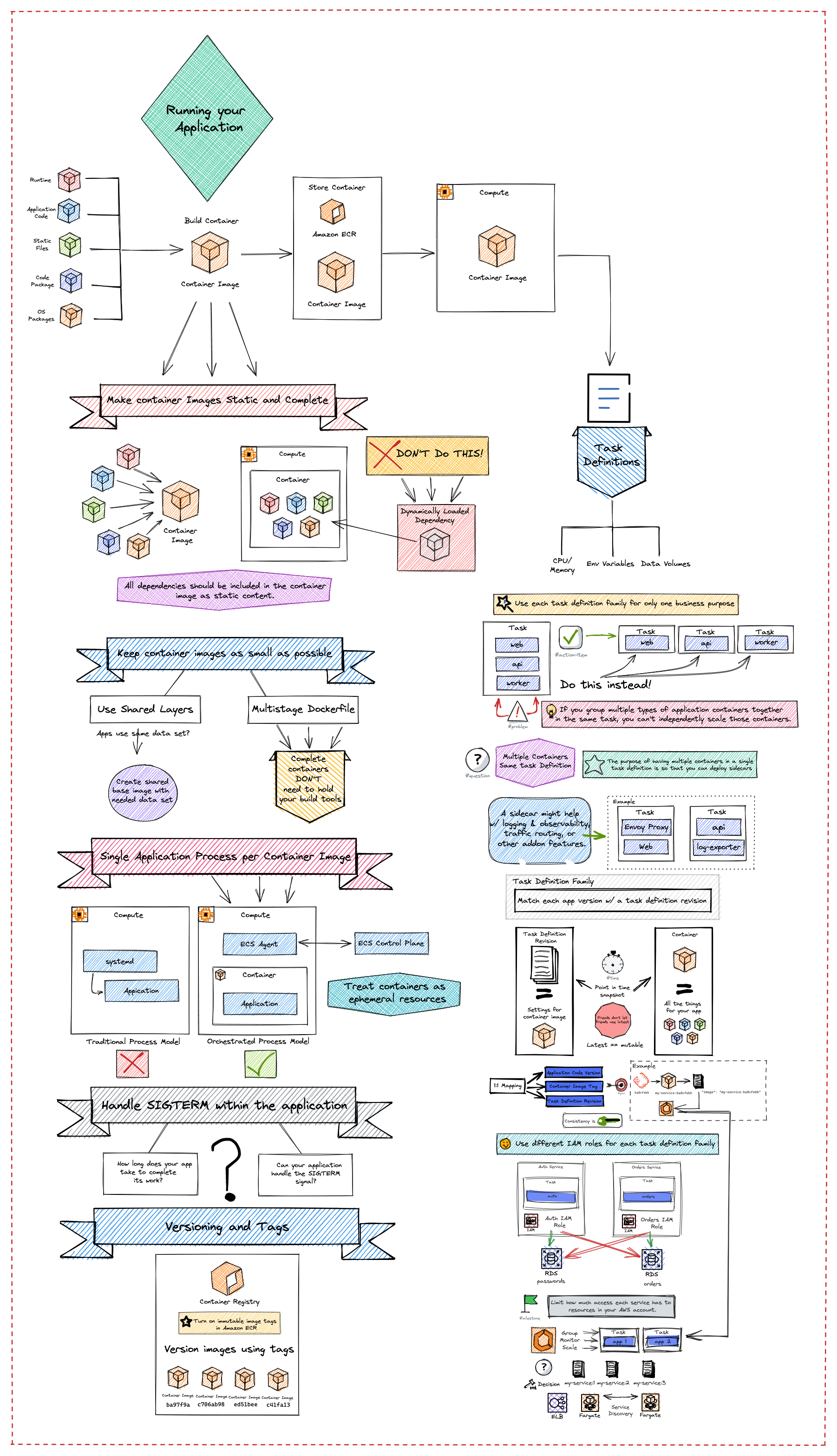
Container Platform Best Practices: Running Your App
Before you run an application using Amazon Elastic Container Service, make sure that you understand how the various aspects of your application work with features in Amazon ECS. This visual covers the main Amazon ECS resources types, what they’re used for, and best practices for using each of these resource types.